Kaasino Crypto Payments and Coins
 Available in GB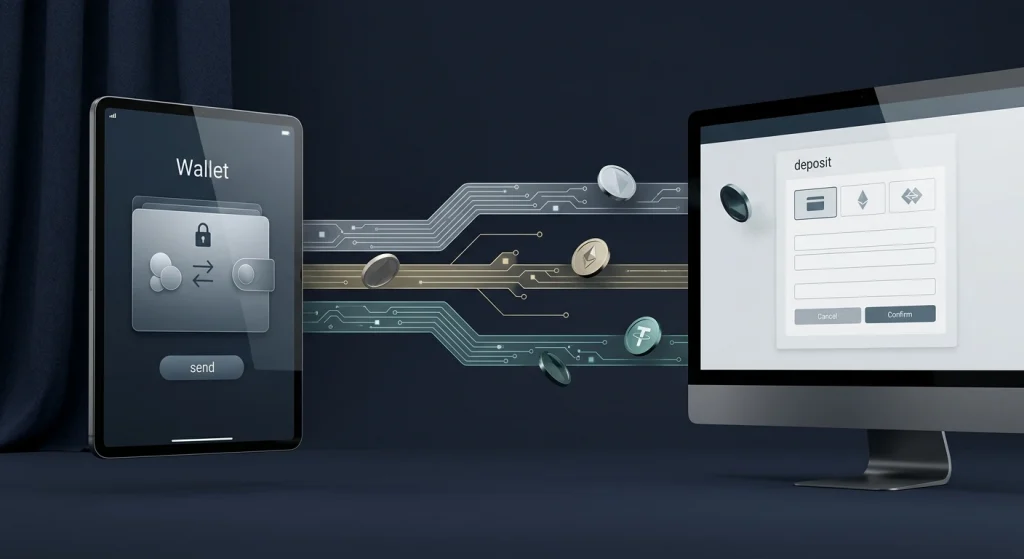
Kaasino supports cryptocurrency payments, and the verified core options include Bitcoin (BTC), Ethereum (ETH), Tether (USDT) and Litecoin (LTC). Current third-party payment listings also show additional digital assets, but the exact menu can change, so this page treats BTC, ETH, USDT and LTC as the dependable reference set rather than presenting a long coin list as permanent.
For a UK user, crypto is best understood as another payment rail, not as a shortcut around account checks or gambling regulation. A crypto deposit still belongs to a normal casino account, and identity verification can be required around withdrawals. The important practical questions are therefore whether the right coin and network are shown in the cashier, how the transfer value is determined, and whether you are comfortable with network fees and exchange-rate movement. For the wider cashier picture, see the payment methods guide.
Table of Contents
- Which cryptocurrencies are verified at Kaasino?
- How crypto deposits differ from card or bank payments
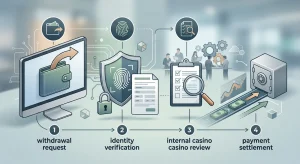
- Crypto withdrawals still involve account verification
- Network fees, casino fees and the real cost of a transfer
- Volatility: a payment issue, not an investment recommendation
- Crypto support does not change Kaasino's UK licence position
- When crypto makes practical sense at Kaasino
- Frequently asked questions
Which cryptocurrencies are verified at Kaasino?
Current public information supports cryptocurrency payments at Kaasino and specifically identifies BTC, ETH, USDT and LTC. These four cover two large native crypto assets, a widely used stablecoin and a lower-value-transfer alternative. Current external listings also show a broader set of coins, but a payment page is most useful when it separates a stable core from a changing cashier catalogue.
| Asset | What it changes for the payment | What to check before sending |
|---|---|---|
| Bitcoin (BTC) | Uses the Bitcoin network and a BTC wallet address. | Address, network and the amount shown in the cashier. |
| Ethereum (ETH) | Uses an Ethereum-compatible transfer route. | Network selection, destination address and wallet fee. |
| Tether (USDT) | Uses a stablecoin whose transfer route can depend on the network selected. | The exact USDT network shown by the cashier and wallet. |
| Litecoin (LTC) | Uses the Litecoin network and an LTC address. | That the destination is explicitly for LTC before confirming. |
The practical rule is simple: never infer compatibility from the coin ticker alone. This matters most with tokens such as USDT, which can exist on more than one blockchain. The deposit screen and your sending wallet must agree on both the asset and the network. A correct coin sent through the wrong network can be harder to recover than a conventional bank-transfer mistake.
How crypto deposits differ from card or bank payments
A card payment usually asks you to authorise a charge through a card network and your issuer. A bank payment follows a banking route. A crypto transfer is different because you initiate a blockchain transaction from a wallet to an address supplied by the cashier. That puts more responsibility on the sender to verify the destination and network before the transfer is broadcast.
Crypto also introduces a separate price question. If you hold BTC or ETH and the account value is displayed in a fiat currency, the amount credited can depend on the conversion point used by the payment processor. Current public information does not establish a permanent Kaasino exchange-rate formula, so this guide does not quote one. If the cashier shows both a coin amount and a fiat equivalent, read both before sending rather than assuming the value will match a price seen on an exchange.
For users choosing between payment types, the key difference is control. With crypto, you control the sending wallet and must approve an irreversible address-based transfer. With a card or bank route, the payment is handled through familiar financial rails. Neither is automatically better. The relevant choice depends on which method you already use comfortably, what the live cashier displays and whether you understand the consequences of a mistaken transfer.
Crypto withdrawals still involve account verification
Using cryptocurrency does not remove the normal account layer. Kaasino’s verified fact set supports the statement that identity verification can be required around withdrawals. It does not support a no-KYC or anonymous-withdrawal claim. That distinction matters because crypto marketing elsewhere on the web can make blockchain payments sound detached from account checks when the casino transaction still belongs to an identified user account.
Before relying on crypto for a cashout, review the KYC checks and make sure the account details you supplied are accurate. If verification is requested, resolve it through the account process rather than assuming a wallet address replaces identity checks. The exact document list and review time are intentionally not stated here because those details need current primary confirmation.
The same restraint applies to payout speed. Crypto can settle on-chain quickly once a transaction has been sent, but casino withdrawal processing happens before the blockchain transaction is broadcast. Those are two separate stages. This page therefore does not promise an “instant” crypto withdrawal or quote a fixed processing window. For the broader cashout process and the checks that can occur before payment, use the crypto withdrawals guide.
Network fees, casino fees and the real cost of a transfer
There are potentially two different cost layers in a crypto payment. One is the blockchain or wallet fee used to send a transaction. The other would be any casino or payment-processor fee applied to the deposit or withdrawal. The current current public information does not provide primary-source verification of exact Kaasino crypto fees, so no fixed fee is quoted here.
That matters because a statement such as “crypto is cheaper” can be misleading without context. Network fees can rise or fall, and the fee structure can vary by asset and network. A stablecoin transfer on one network can have a different cost profile from the same token on another network. Before confirming a transaction, check the amount your wallet will deduct and any fee or credited amount displayed by the cashier.
Volatility: a payment issue, not an investment recommendation
BTC and ETH can move materially in price between the time you acquire them, deposit them and later withdraw value. That can change the real-world value of funds even when the casino transaction itself is processed correctly. USDT is designed to track a fiat value more closely, but that does not eliminate network, issuer or platform risks.
The practical point is not to speculate on which coin will rise or fall. It is to recognise that using a volatile asset adds another variable to a gambling payment. If your goal is simply to move a known sterling-equivalent amount into or out of an account, compare the displayed conversion and transfer cost with the card and bank alternatives before choosing crypto. Gambling outcomes are already uncertain, so there is little decision value in adding price exposure accidentally.
Crypto support does not change Kaasino’s UK licence position
Payment technology and regulatory status are separate questions. Supporting Bitcoin, Ethereum or stablecoins does not itself establish that an operator is licensed in Great Britain, and it does not make UK consumer protections attach automatically to the account. The site’s dedicated licence review covers that issue separately.
For this crypto guide, the useful consequence is narrower: judge the payment method on its mechanics while judging the operator’s regulatory position on the relevant licensing evidence. Do not treat a familiar coin, a fast blockchain or support for GBP as a substitute for checking regulatory status. The main Kaasino review brings those separate strands together without treating one as proof of the other.
When crypto makes practical sense at Kaasino
Crypto can be a reasonable choice when you already hold a supported asset, understand wallet transfers and can verify the network details confidently. It can also be useful when you prefer a blockchain payment rail to a card or bank route. That is a practical convenience case, not a claim that crypto is universally faster, cheaper or safer.
It is a weaker choice when you would need to buy crypto solely to fund the casino, when you are unfamiliar with wallet addresses, or when you are relying on a fixed sterling value and do not want conversion uncertainty. In those situations, a conventional method from the payments menu may be easier to audit and understand.
A good decision process is to compare three things at the moment of payment: the method shown in the live cashier, the total value leaving your wallet or bank, and the account or withdrawal checks that still apply. If any one of those is unclear, do not use speed claims from a review as a substitute for the information on the transaction screen.
For the wider cashier picture, see the payment methods guide.
Frequently asked questions
Does Kaasino accept Bitcoin?
Yes. Bitcoin is part of the verified core crypto payment set alongside Ethereum, USDT and Litecoin.
Can I use USDT at Kaasino?
Yes. USDT support is verified. Because USDT can be transferred on different networks, use only the network displayed by the live cashier for the transaction.
Are Kaasino crypto withdrawals instant?
No fixed payout time is promised here. Casino review and verification can occur before an on-chain transaction is sent, so blockchain settlement speed is not the same thing as total withdrawal time.
Can crypto be used without KYC?
This guide does not support that claim. Identity verification can be required around withdrawals, and using a crypto wallet does not remove account checks.
What are Kaasino’s crypto fees and limits?
No exact figures are stated because current primary-source confirmation is not available for a fixed fee or limit schedule. Check the live cashier and transaction confirmation before sending.